
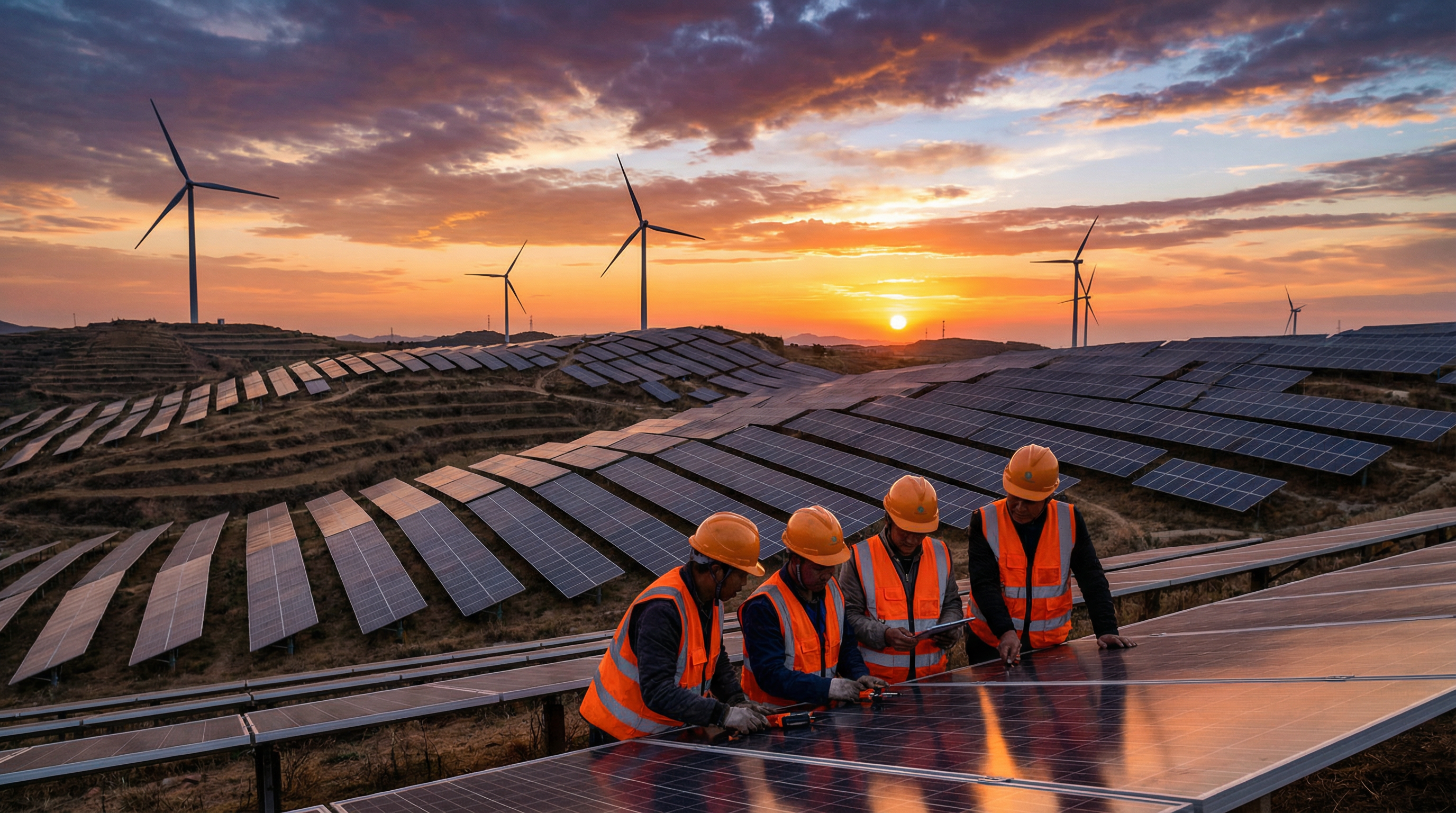
Renewable Energy Projects Driving Economic Diversification
Countries are increasingly viewing renewable energy not just as climate action but as economic diversification strategy. Large-scale solar and wind projects are creating new revenue streams, reducing energy import dependence, and attracting foreign direct investment.
Renewable energy has transcended its origins as purely an environmental imperative to become a cornerstone of economic diversification strategies worldwide. Nations previously dependent on fossil fuel imports or commodity exports are discovering that solar, wind, and other renewable technologies offer pathways to energy independence, industrial development, and sustainable economic growth.
Economic Diversification Beyond Climate Goals
While climate change mitigation remains important, governments increasingly emphasize the economic benefits of renewable energy deployment. Large-scale solar and wind projects create construction jobs, generate tax revenues, and reduce foreign exchange outflows previously spent on fuel imports. For oil-exporting nations, renewables offer a hedge against fossil fuel price volatility and a transition pathway as global demand shifts.
Countries in the Middle East and North Africa exemplify this strategic pivot. Nations with abundant solar resources are developing gigawatt-scale projects that not only meet domestic electricity demand but position them as future clean energy exporters. These investments create new industries—solar panel manufacturing, energy storage, green hydrogen production—that diversify economies beyond hydrocarbon dependence.
Attracting Foreign Direct Investment
Renewable energy projects have become magnets for foreign direct investment, particularly in emerging markets with strong resource endowments and improving regulatory frameworks. International developers, equipment manufacturers, and financial institutions are deploying billions in markets from Sub-Saharan Africa to Southeast Asia.
This capital influx extends beyond project finance. Renewable energy investments often catalyze broader economic development—upgrading transmission infrastructure, building local supply chains, and transferring technical knowledge. Countries that establish clear regulatory frameworks and competitive procurement processes attract not just capital but long-term partnerships that build domestic capabilities.
Energy Storage: The Bankability Game-Changer
The integration of battery energy storage systems has fundamentally altered the economics and reliability of renewable projects. Storage enables solar and wind facilities to provide dispatchable power, addressing the intermittency challenge that previously limited renewable penetration. This makes projects more bankable and allows higher renewable shares in electricity grids.
Declining battery costs—down 90% over the past decade—have made storage economically viable at scale. Hybrid renewable-plus-storage projects now compete directly with fossil fuel generation on cost, without subsidies. This transformation is accelerating deployment in markets where grid stability was previously a barrier to renewable adoption.
Local Content and Industrial Development
Progressive governments are using renewable energy procurement to drive industrial policy objectives. Local content requirements in tenders incentivize manufacturing investment, skills development, and technology transfer. Countries like India, Brazil, and South Africa have successfully used this approach to build domestic renewable energy industries.
The benefits extend beyond immediate project employment. Establishing local manufacturing capacity creates export opportunities, particularly for components like solar mounting structures, cables, and balance-of-system equipment. Over time, countries can move up the value chain, from assembly to component manufacturing to research and development.
The Path Forward
Renewable energy's role in economic diversification will only grow as costs continue declining and technologies mature. Green hydrogen, produced from renewable electricity, represents the next frontier—offering pathways to decarbonize heavy industry, shipping, and aviation while creating new export commodities.
Countries that move decisively—establishing clear policy frameworks, investing in grid infrastructure, and building local capabilities—will capture the greatest benefits. The renewable energy transition is not just about replacing fossil fuels; it is about building resilient, diversified economies fit for the 21st century.